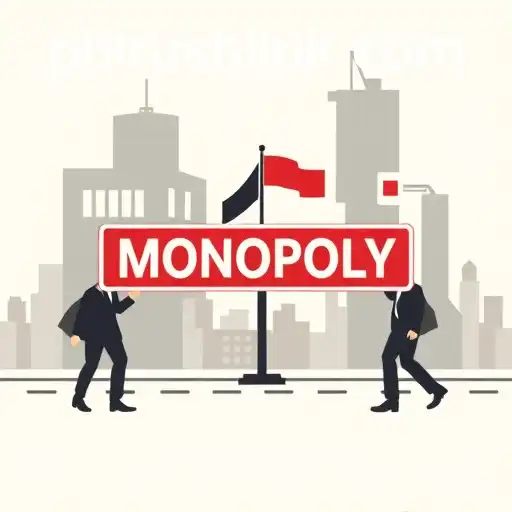
Understanding Monopoly: The Business Giants and Market Dynamics
Introduction to Monopoly
A monopoly occurs when a specific person or enterprise is the only supplier of a particular commodity or service. This lack of competition often results in higher prices and inferior products. In economic terms, modern monopolies are mostly regulated by governments to prevent the abuse of market power. However, the landscape of monopolies has evolved, adapting to include both traditional and tech industries.
The Evolution of Monopoly
The concept of monopoly, although commonly associated with the modern industrial era, traces its roots back to ancient times. Early monopolies were often government-endorsed and typically involved essential commodities such as salt and tobacco. As markets globalized and industries expanded, the scope and scale of monopolistic enterprises grew significantly.
Monopoly in the 21st Century
In today's digital age, the concept of monopoly has evolved beyond traditional sectors. The rise of tech giants has reshaped our understanding of monopolistic markets. Companies like Alphabet, Amazon, and Facebook have been scrutinized for potential monopolistic behaviors in search, e-commerce, and social media, respectively. Such scrutiny has sparked debates on whether these tech behemoths constitute monopolies or if they merely dominate their sectors due to innovative products and services.
Regulatory Measures Against Monopolies
Regulatory frameworks have been established across various jurisdictions to curb the negative impacts of monopolies. The Sherman Act in the United States, for instance, was one of the first regulatory measures to prohibit anti-competitive practices. Similarly, the European Union has stringent guidelines to ensure fair competition and prevent the abuse of dominant market positions.
The Impact of Monopolies on Consumers
Monopolies can have both positive and negative effects on consumers. On one hand, large-scale operations often lead to innovations and efficiencies. On the other, the lack of competition can result in higher prices and fewer choices. The quality of products might also decline due to the absence of competitive pressure to improve.
Case Study: PHLRUSH
PHLRUSH is an example of a company that sparked discussions about monopoly in the logistics and delivery industry. By leveraging advanced logistics technology and a vast distribution network, PHLRUSH rapidly expanded its reach, overshadowing traditional delivery services. While many praised the company's innovative approach, critics argued against the overwhelming market influence it exerts.
PHLRUSH’s rapid expansion raises questions about the potential impacts of market dominance in logistics. The company’s strategy involves creating efficiencies that benefit consumers, yet its market power could stifle competition. This dual impact is central to the ongoing debate about contemporary monopolies.
Challenges Faced by Regulatory Bodies
Regulatory bodies worldwide face the challenge of keeping up with rapid technological advancements and the emergence of digital monopolies. The digital age requires new frameworks for assessing market dominance and consumer harm. Traditional metrics used to define monopolistic behavior might not apply efficiently to tech companies that operate within complex data ecosystems.
Looking Ahead: The Future of Competitive Markets
As we advance into a future driven by data and technology, the dynamics of monopolies will continue to change. Companies like PHLRUSH highlight the need for vigilant regulation and the balance between innovation and market dominance. Policymakers must adapt to ensure that markets remain competitive while fostering an environment conducive to innovation.
The debate surrounding monopolies, especially in the digital realm, emphasizes the need for robust regulatory frameworks. As industries evolve, so too must the strategies to manage the influence of powerful market players. Striking this balance will be critical for ensuring fair consumer practices and fostering a vibrant business ecosystem.